In 1910, two of the richest men in America – Nelson D. Rockefeller and Andrew Carnegie – hired Abraham Flexner to review medical institutions across North America. The two had questions regarding the quality of the medical teaching facilities in the US and Canada.
Despite his non-medical background, focused solely on the classics, Abraham Flexner was chosen for his perceived objectivity. Unlike his two funders, Flexner was more interested in the extent to which the schools enjoyed rights or were they merely unqualified courtesies in the hospitals as described in their university catalogues.
Flexner was drawn to the German universities of the 1880s, where medical professors had no responsibilities for patient care and focused on research and teaching. After completing his investigation, he submitted the Flexner Report that would change the course of American medicine thereafter.
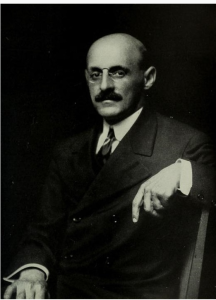
Abraham Flexner
For his report, Flexner created a three-tier ranking system. The top tier schools ranked most favorably and came closest to the established John Hopkins model. His middle tier ranked schools as substandard but could be salvaged. And the lowest group was of such poor quality Flexner recommended closing them. As result, one-third of existing medical schools were abandoned, including all but two of the seven Black medical schools for students. Only Howard University College of Medicine in D.C. and Meharry Medical College in Nashville, TN remained, leaving an enormous shortage of community-based doctors for Black patients.
By 1910, at the tail end of the scientific and industrial revolution, there was a genuine belief in the benefit of applying the scientific process to every convention, including medicine. Flexner’s report was widely accepted, due in part to the powerful oligarchs driving it forward. Only a few authoritative voices objected, making a limited impact. Canadian physician William Osler believed that the Report recommendations wrongly placed the advancement of science over the welfare of patients and the education of students.
The consequences of the Flexner Report have lasted for over a century.
The Changes
One of the first changes was the phasing out of various forms of natural medicine from medical schools, favoring patentable drugs that would undergo scientific testing. Before the Flexner Report, people often turned to a diverse range of treatments, including nutrition, herbal remedies, homeopathy, midwifery, and other healing modalities. When health insurance began to dominate as the method of primary payment for doctors and hospitals, many of the earlier medical and healing methods were either limited or no longer covered.

The curriculum inside medical schools was also impacted, including a minimal focus on nutritional education. Often overlooked treatments that didn’t require pharmaceuticals were no longer taught. Many of the well-developed remedies used for centuries were tossed or relegated to the supplement industry.
Coincidentally, or not, Rockefeller owned 90% of the American petrol industry and stood to gain enormous profits as petrochemicals were emerging. Today, they are used extensively in producing active pharmaceutical ingredients, solvents, excipients, and packaging materials. The petrochemical industry as it relates to pharmaceuticals alone is valued in the hundreds of billions of dollars.
According to Dr. Paul Marik, commenting on the impact of the Flexner Report: “The entire medical curriculum is based on pharmacology and interventions, rather than traditional medicine, herbal medicine, and nutritional therapy. A nutrition curriculum is not taught at medical school, nor is anything regarding herbal medicine. So, this seems to be what the plan was: to completely eliminate anything that was counter to the pharmaceutical model.”
Now, in 2024, the query is this: Did the Flexner Report overlook the ethos of medicine in its pursuit of science? The question is on the minds of many doctors, patients, and medical schools. Some changes have already been made including courses in patient communication, medical ethics, and medical humanities.
One answer can be found in an article “The Flexner Report – 100 Years Later” by Dr. Thomas P Duffy. Dr. Duffy writes: “Review of medical care in the last century documents that the trust and respect that were extended to the profession 50 years ago have been substantially eroded. There has been a fall from grace of our vaunted profession. Physicians have lost their authenticity as trusted healers . . . The discontent with doctor’s errors, doctor’s silence, doctor’s experimentation, and the crass monetary orientation of the profession is legion. The profession appears to be losing its soul at the same time its body is clothed in a luminous garment of scientific knowledge.”
Another, more positive answer is a “call for a new Flexner Report, to take stock and address the shortcomings in medical education that have occurred in the aftermath of the original report.” One can only imagine how a major do-over could benefit patients and get doctors back to their oath of “first, do no harm” by putting their patients over profits.

Photo credits: Stethoscope – hush – naidoo -jade, Orange vs. pills – diana pohlekina, Imagine – jeremy beck
Interesting Barbara! Hard to know the benefit of closing the “substandard”, especially the Black medical schools. After a couple of sports injuries recently, I’ve become a proponent of physical therapy. I have a thoughtful, compassionate, intelligent grandson just started medical school…if all doctors were like him, I’d be delighted.
I always appreciate any comments – any and all – that appear after a blog post. While it is true that Flexner worked to ensure the training of Black physicians, other documents I found researching this post indicated a loss (to this day) of Black doctors particularly in the southern states.
What I find the most dangerous of Flexner’s influence is the ushering in of pharma and the exclusion of many other healing modalities. On a personal note, I gave up on my local so-called health team and found a Naturopathic physician (paying out of pocket so limit my visits). I was stunned when the office manager booked my first appt. for 1 & 1/2 hours – “so she can get to know you and consider your medical history.”
That’s what, in my mind, is missing – time and a broader approach to what might be the cause and cure for certain conditions.
More health posts to come.
Thank you for your informative article. I have become disillusioned with the medical profession as I became so aware of big pharma controlling so much. In fact although I do not totally eschew going to my doctor, I have become very comfortable with my naturopath.
I believe we need to be in charge of our own health and if that means saying no to certain medicines or vaccinations, then that becomes my responsibility.
Barbara, thank you for another eye opener. I have noticed of late a smidgen of info trickling out about the benefits of nutrition over pills. One can only hope that common sense could possibly prevail over big pharma. I know, I know, that sounds way too optimistic, but folks our age can remember when aspirin “cured” just about everything.